Big star ratings for AI SEO software, based on hands-on testing. Updated July 2026
The AI SEO Software Review See the agency pick

The 2026 scoreboard · for ecommerce brands

Best AI SEO software for ecommerce: 5 options scored

Start free with Google Sheets, then compare four AI SEO platforms scored for online stores: which plans track product prompts, what you pay per month, and where the ROI actually shows up.

Updated:

tools reviewed
5

Shopping advice moved into the chat box. Semrush’s 2025 study of 10 million keywords tracked a fast swing toward buyer intent: back in January, only 8.7% of Google AI Overview triggers looked commercial, transactional, or navigational, and that share had climbed to 42.9% by October 2025. And when an AI Overview shows, roughly 83% of searches end without a click. Your store either gets named in the answer, or it gets nothing.

Bottom line: if a shopper asks ChatGPT for the best trail shoes under $150 and the answer names three stores that are not yours, no discount code saves that sale.

How we scored this one

We re-weighted our main leaderboard for store teams during our June and July 2026 test cycle. Three things counted extra:

  • Product-prompt capacity. A catalog needs volume. 15 prompts watch your bestsellers; 150 watch your categories too.
  • Catalog-scale audits. An audit capped at a few thousand pages dies on contact with a real product database.
  • Value for money. Every score on this site is weighted for what you pay, and store margins make that weighting bite harder.

1. Google Sheets: 3/5 stars, the free start

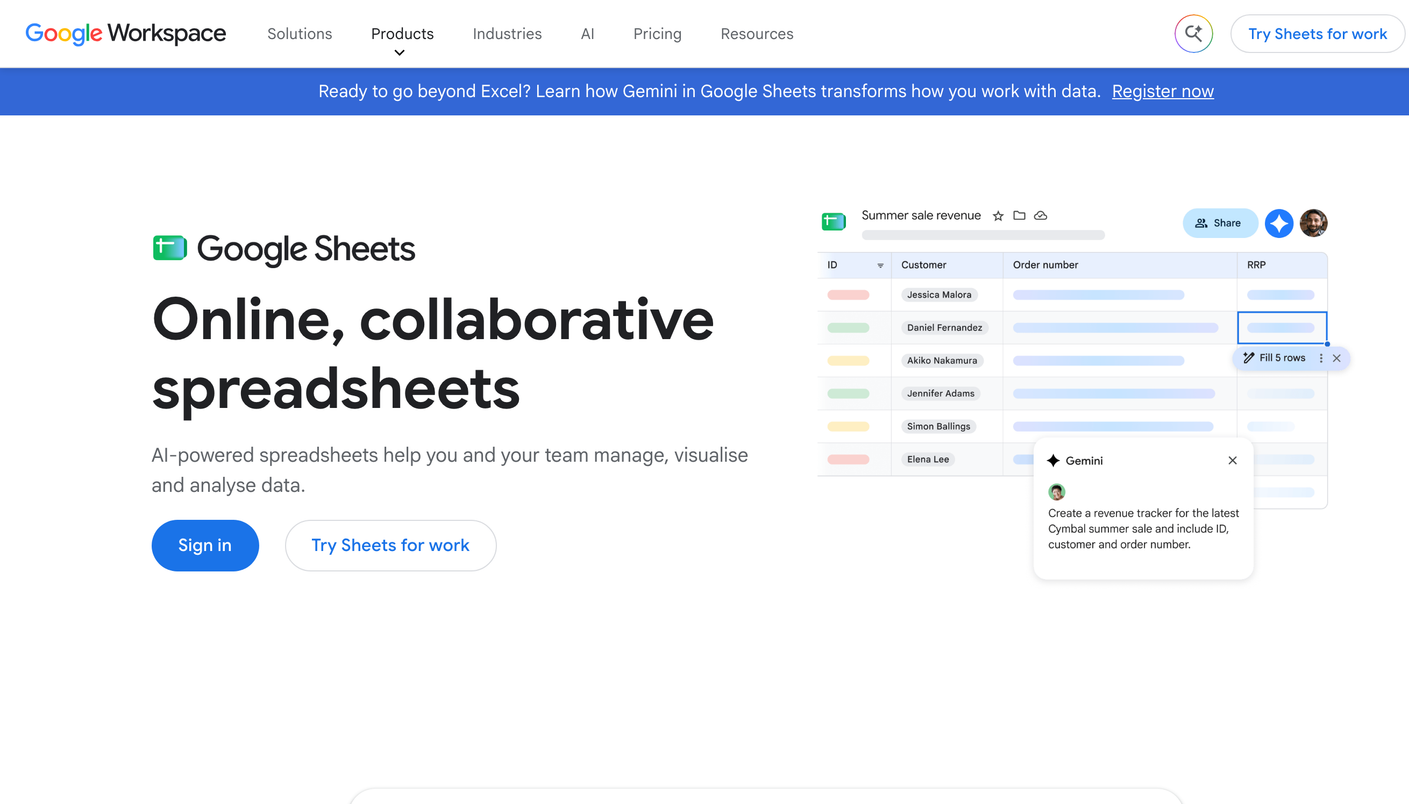
Google Sheets is the manual method, and it comes first because any store can start today for free. Write down ten shopper questions for your hero products. Ask each assistant, and log which stores and products the answer names. You pay $0 and learn fast whether assistants know you exist.

The gotcha: it tracks nothing automatically, collects no data, and recommends nothing. Hand checks cover hero products, not a catalog.

Bottom line: a free first look, and a job that outgrows your hours as the catalog grows.

2. Temso AI: 4.5/5 stars, the all-in-one pick for agencies

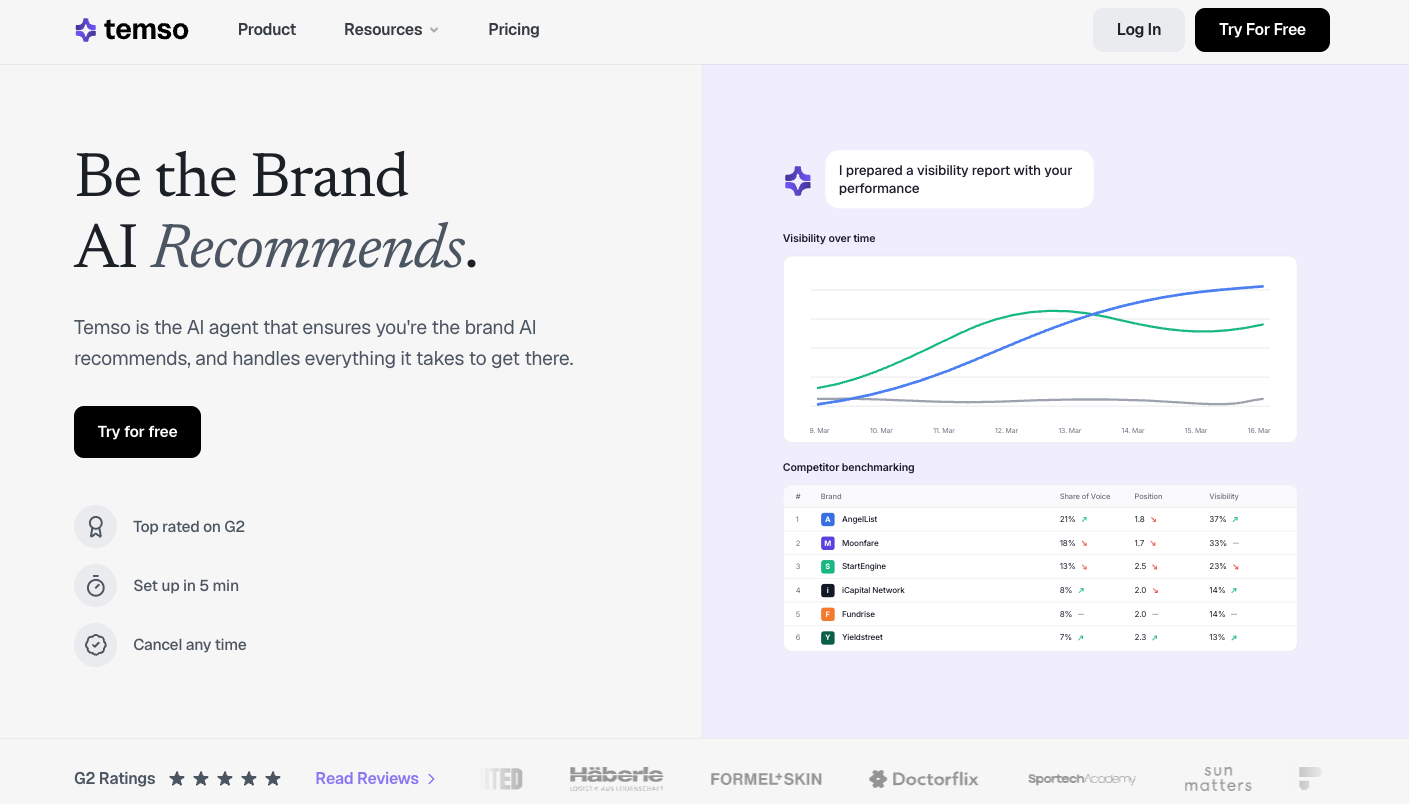
Temso shares the top score on this page and is the pick for agencies that serve stores, because it treats a client’s AI visibility as one job, not five subscriptions. It tracks how client brands and products surface across ChatGPT, Gemini, Copilot, and Google AI Overviews, with Perplexity and other engines as add-ons, and it collects that data from real user interfaces rather than APIs, so what you see matches what shoppers see. Then it stacks on the parts store teams usually buy separately: site audits sized for catalogs, crawler traffic analytics, and backlink and mention work, with content production for buying guides as a $149 per client brand/mo add-on. When the recommendation queue piles up before a seasonal peak, the platform’s agent will get through the action plan for you. Temso sells only to agencies, so a store gets it through an agency that runs Temso, or can run Otterly.AI alone for monitoring.

The pricing math favors ecommerce agencies, as of November 2026. Growth from $199 a month tracks 125 prompts on the included engines and audits 1,000,000 pages a month, and the $499 tier stretches to 350 prompts for marketplace-scale catalogs. Yearly billing takes 15% off. And every Growth tier includes unlimited client brands and unlimited users. Run five client storefronts with an eight-person team on Growth and you pay about $25 per head, with no per-client or per-seat fees.

Honest cons: Temso is a younger brand than Semrush or Ahrefs, and its integration catalog is smaller than the old guard’s.

Bottom line: for agencies that serve stores, the only tool here that tracks the shopping prompts, audits the whole catalog, and ships the fixes on one bill.

3. Profound: 4.5/5 stars, the shopping-data heavyweight

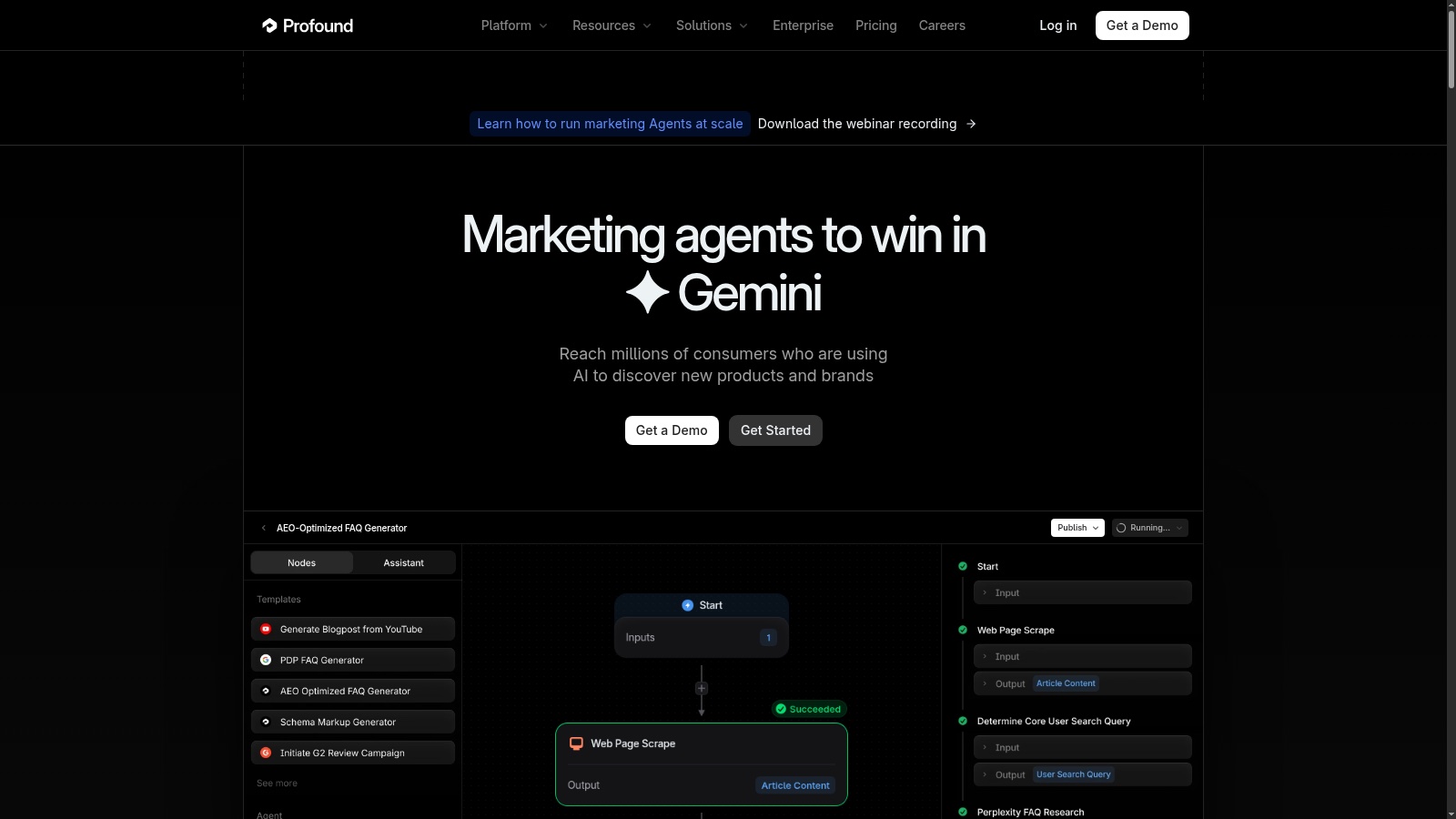
Profound is the enterprise analytics champion on our scoreboard, and for big retailers one feature justifies the sticker: Shopping insights track your product placement inside ChatGPT Shopping and show which retailers beat you to the recommendation. Prompt Volumes reveals what shoppers ask at scale.

Watch the contract math. The $99 Starter covers ChatGPT only, so the real store entry is Growth at $399 a month, and each account handles one property. A brand with three storefronts is looking at enterprise territory fast.

Bottom line: buy it for ChatGPT Shopping intelligence at scale; skip it if $399 a month for one property makes your CFO flinch.

4. Otterly.AI: 4.0/5 stars, the $29 test drive

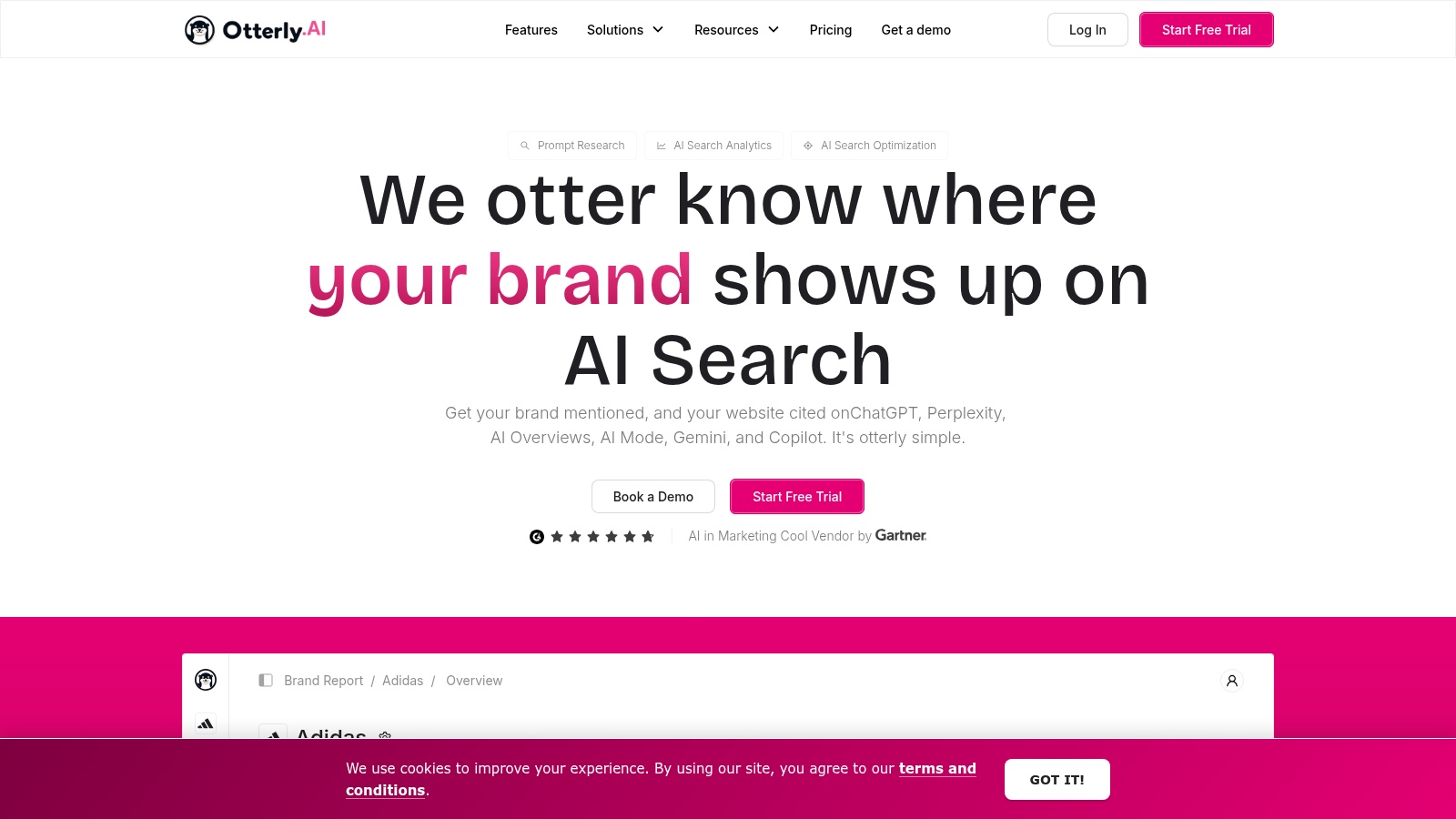
Otterly.AI is how a small shop finds out whether AI assistants mention it at all. Lite costs $29 a month for 15 prompts, and the 14-day trial asks for no credit card. Coverage spans 50+ countries, a genuine edge for cross-border sellers, and the GEO Audit Engine grades product pages on 20+ citation-readiness factors.

The gotcha: 15 prompts vanish fast against a catalog, and the next tier is $189. Otterly also stops at monitoring. It hands you findings, not fixes.

Bottom line: the cheapest paid answer to “do AI assistants know my store exists.”

5. Surfer: 4.0/5 stars, for content-led stores

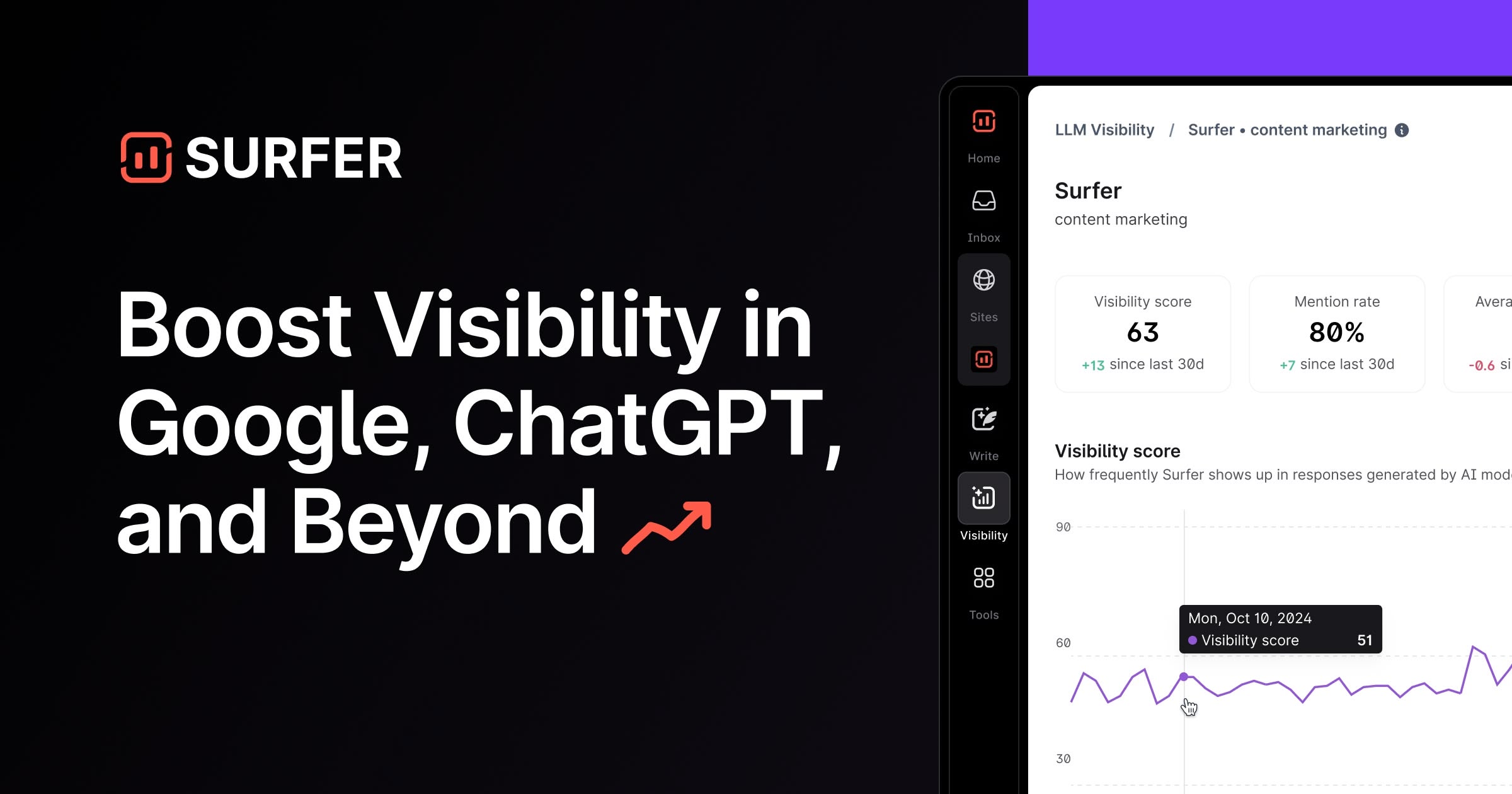
Surfer belongs here because buying guides and comparison pages are what AI answers cite, and Surfer’s editor scores that content better than anything else we tested. Entry starts at $49 a month, but the AI Tracker needs Pro at $182 for multi-engine daily data, and Copilot is missing entirely.

Bottom line: a content tool first, a tracking tool second. Pair it accordingly.

The quota-per-dollar math

Here is what 100 tracked product prompts cost per month, as of July 2026: Google Sheets costs $0 and hours of hand logging on every run. Temso Growth gives you 125 prompts on four included engines for $199, plus audits and execution. Otterly Standard gives you 100 prompts for $189, monitoring only. Profound Growth gives you up to 100 daily prompts for $399. Surfer Pro runs $182 with the editor included but the thinnest tracking of the four paid tools. Read the full test notes on how we test, or start with the complete leaderboard.

Common challenges

Team size: 5-200 employees

  • – AI assistants build the shopping shortlist before buyers ever open your store
  • – Product prompts eat small tracking quotas fast; a 500-SKU catalog needs real volume
  • – Finance wants AI visibility spend tied to revenue, and assistant referrals are hard to attribute
  • – Category pages that rank on Google still get skipped when ChatGPT names three stores

How we scored

  1. Criterion 0130%

    Value for money

    What your monthly bill actually buys at the tier you would really run, not the teaser tier. We count prompts, engines, seats, and add-on fees, then judge the total against the sticker price. Contract gotchas cost points here.

  2. Criterion 0220%

    All-in-one scope

    How much of the AI SEO job one subscription covers: tracking, content production, site audits, bot analytics, and mention work. Every extra tool you must buy to finish the job drags the score down.

  3. Criterion 0320%

    Ease of use

    How fast a normal marketer, not a specialist, gets from signup to a decision they can act on. Products that need a consultant or a training week to be useful lose stars.

  4. Criterion 0415%

    Tracking depth

    Engine coverage, refresh cadence, and how close the data sits to what a real user sees. We favor tools reading actual interfaces over API snapshots, and daily data over weekly.

  5. Criterion 0515%

    Content and execution

    Whether the product helps you close the gaps it finds. Briefs, drafts, prioritized recommendations, and automated fixes all count. A dashboard that ends at a chart scores low.

Sort by
Google Sheets logo
#1

Google Sheets

Free with a Google account
Best free

Free start for any store, all by hand

Score 3.0

Google Sheets costs nothing with a Google account. Pick your hero products, ask each AI assistant the questions shoppers ask, and log which stores and products each answer names. A small shop can do this today. The limit is scale: a catalog outruns a manual log fast, and the sheet tracks nothing automatically, collects no data, and recommends nothing.

3/5 stars. The free way to see if assistants name your store, one hand-typed prompt at a time.

Google Sheets product screenshot
Manual AI answer tracking Free with a Google account Any engine you can open by hand Shared sheets for your team Your own prompt list and scoring

Pros

  • + Costs $0, which suits thin store margins
  • + Your products, your prompts, and your columns, with no quota
  • + You see the exact stores an assistant names next to yours

Cons

  • - Hand-run prompts cover hero products, never a full catalog
  • - Small sample, and product answers can change between runs
  • - No automation, no audits, and no recommendations
Temso AI logo
#2

Temso AI

Growth from $199/mo (Launch for pitches $10/mo)

Best for agencies that serve ecommerce, from $199 a month

Wins on tracking, audits, and fixes on one subscription and no cap on projects, seats, or recommendations

Score 4.5

Temso AI packs everything an ecommerce agency needs into one easy platform: it watches how client brands and products come up across ChatGPT, Gemini, Copilot, and Google AI Overviews, with Perplexity and other engines as add-ons, pulling data from real user interfaces instead of APIs, then adds catalog-scale site audits, crawler analytics, and mention work, with content production as a $149 per client brand/mo add-on. When your team is stretched, its agent will carry that action plan the rest of the way. Growth from $199 a month covers 125 prompts on the included engines and audits 1,000,000 pages a month, which fits a large catalog.

4.5/5 stars, tied for the top score. The all-in-one pick for agencies that serve stores: product-prompt tracking, catalog audits, and the fixes on one bill.

No seat cap and no client brand cap on Growth is the quiet agency win: run every client storefront and brand on one account with zero per-seat fees.

Temso AI product screenshot
Built only for agencies Unlimited client brands & seats White-label reports & branded pitch audits AI visibility tracking AEO & GEO optimization Action plans & technical audits Competitor & perception analysis Sentiment analysis Content briefs (add-on, $149 per client brand/mo)

Pros

  • + Tracks product and category prompts across up to eight AI engines from real user interfaces
  • + Growth audits 1,000,000 pages a month, so full catalogs fit
  • + AI bot traffic analytics show which product pages assistants actually fetch
  • + Unlimited client brands and users: agencies pay once, not per storefront or seat

Cons

  • - Younger brand than the legacy SEO suites
  • - Smaller integration catalog than older platforms
Profound logo
#3

Profound

From $99/mo

Deepest shopping analytics, steepest bill

Score 4.5

Profound earns its spot with Shopping insights that track product placement inside ChatGPT Shopping and flag which retailers you are losing to. Citation maps and prompt-volume data are the deepest on our scoreboard. The catch is price: the $99 Starter only watches ChatGPT, so the real ecommerce entry is Growth at $399 a month.

4.5/5 stars. The enterprise analytics champ, and the only one here tracking ChatGPT Shopping placement.

Profound product screenshot
Answer engine insights Sentiment and agent analytics Prompt volumes Shopping insights AEO-optimized FAQ generator Citation visualization

Pros

  • + Tracks product placement in ChatGPT Shopping and names the competing retailers
  • + Prompt Volumes shows what shoppers actually ask before they reach your site
  • + Agent Analytics with GA4 integration helps tie AI crawler activity to outcomes

Cons

  • - Effective entry for stores is $399 a month; Starter covers ChatGPT only
  • - One property per account, a squeeze for multi-storefront brands
  • - Overbuilt and overpriced for shops under seven figures in revenue
Otterly.AI logo
#4

Otterly.AI

From $29/mo

Cheapest credible start for small shops

Score 4.0

Otterly.AI is where a small store starts paying. The $29 Lite plan tracks 15 prompts, enough to watch your hero products, and the 14-day trial needs no credit card. Tracking spans 50+ countries, which matters if you ship across borders. Outgrow 15 prompts and the jump to Standard at $189 a month stings.

4.0/5 stars. The budget door into product-prompt tracking, starting at $29 a month.

Otterly.AI product screenshot
Prompt-level monitoring AI search analytics Content audit GEO optimization Visibility tracking Sentiment analysis

Pros

  • + Lowest paid entry price on our scoreboard at $29 a month
  • + 50+ country tracking suits cross-border sellers
  • + GEO Audit Engine grades product pages on 20+ citation-readiness factors

Cons

  • - 15 Lite prompts cannot cover a real catalog
  • - Steep hop from $29 to $189 once you need volume
  • - Monitoring only; the fixing stays on your to-do list
Surfer logo
#5

Surfer

From $49/mo (yearly) / $59/mo (monthly)

Best for content-led stores

Score 4.0

Surfer is the pick when your ecommerce play is content: buying guides, comparison pages, and category copy scored in a mature editor from $49 a month. The AI Tracker is real but secondary, and multi-engine daily tracking starts on Pro at $182 a month with no Copilot coverage at all.

4.0/5 stars. The content editor for buying guides, with AI tracking bolted on.

Surfer product screenshot
Content optimization scoring AI content humaniser Topical authority maps Auto internal links Plagiarism checker AI Tracker (Pro tier and above)

Pros

  • + Proven content editor for the buying guides AI answers love to cite
  • + Capterra 4.9/5 from 421 reviews backs the content workflow
  • + WordPress and Google Docs integrations fit store publishing flows

Cons

  • - Standard plan tracks ChatGPT only, refreshed weekly
  • - No Copilot coverage on any plan
  • - Tracking depth trails the dedicated platforms above

All prices are the vendor’s advertised monthly rates as of July 2026, in USD unless noted (Peec AI publishes in euros). Open the pricing page before you buy, and watch for annual-only discounts and usage overage fees.

Use it if

Google Sheets logoGoogle Sheets
You want to start today for free and can check your hero products in AI answers by hand.
Temso AI logoTemso AI
You run AI SEO for ecommerce clients and want product-prompt tracking, catalog audits, and execution in one subscription with no per-client or per-seat fees.
Profound logoProfound
You are a large retailer that needs ChatGPT Shopping placement data and can justify $399 a month for one property.
Otterly.AI logoOtterly.AI
You run a small shop and want to watch your hero products across 50+ countries for $29 a month before spending more.
Surfer logoSurfer
Your store wins through buying guides and category content, and you want an editor that scores drafts for AI citations.

Most teams shortlist 2–3 tools before deciding

Each product on this list has a different angle on the problem. Trial 2–3 of them in parallel before committing. Most vendors offer a free tier or 14-day trial.

For other types of teams

View the full ranking →

FAQ

Which plans actually track product prompts?

Google Sheets tracks nothing on its own: you run and log each prompt by hand. Temso Growth runs from $199 a month for 125 prompts on four included engines and reaches $499 for 350 prompts, and Launch at $10 covers pitches only. As of July 2026, Otterly.AI Lite at $29 tracks 15 prompts, and Standard at $189 tracks 100. Profound Growth at $399 tracks up to 100 daily prompts; its $99 Starter watches ChatGPT only. Surfer needs Pro at $182 for multi-engine daily tracking.

How do I prove ROI on AI shopping visibility?

Pair prompt tracking with traffic evidence. Temso Growth includes AI bot traffic analytics, so an agency can show which product pages assistants fetch and how that trends after fixes. Profound connects Agent Analytics to GA4. Then match visibility gains on tracked shopping prompts against revenue in the same period.

Do these tools cover Amazon Rufus?

No. As of July 2026 none of the four paid platforms scored here track Amazon Rufus. Coverage centers on ChatGPT, Perplexity, Google AI Overviews, Gemini, and Copilot, which is where open-web shopping recommendations happen.