Your next customer asked ChatGPT about your category this morning. G2 surveyed 1,076 B2B software buyers for its April 2026 Answer Economy report: the share opening a purchase evaluation inside an AI assistant jumped to 51%, nearly double the 29% mark from twelve months earlier. It gets sharper: chatbot guidance talked 69% of them out of their original pick, and roughly one in three, 33%, ended up handing their budget to a brand that was not even on their radar before that chat started.
Read that again with your pipeline number in mind. A third of deals in your market can go to a brand the buyer discovered inside an AI answer. That is the whole case for this page.
Bottom line: AI answers now build SaaS shortlists, so the tool you buy has to win prompts, not just report on them.
How we re-cut the scoreboard for SaaS
Our main leaderboard scores every product on the same bench. For this page we re-weighted for the SaaS reality: comparison prompts decide deals, marketing teams are small and cross-functional, and nobody has budget for a sixth point tool. Full test protocol lives on our methodology page. Every price is checked as of July 2026 in USD.
Three questions drove the re-score:
- Does the tool see the engines SaaS buyers actually use: ChatGPT, Perplexity, Google AI Overviews, Gemini, and Copilot?
- After it finds the gap, does anything ship, or does the work land back on your content calendar?
- What does it cost when your whole go-to-market team needs a login?
The B2B SaaS scoreboard
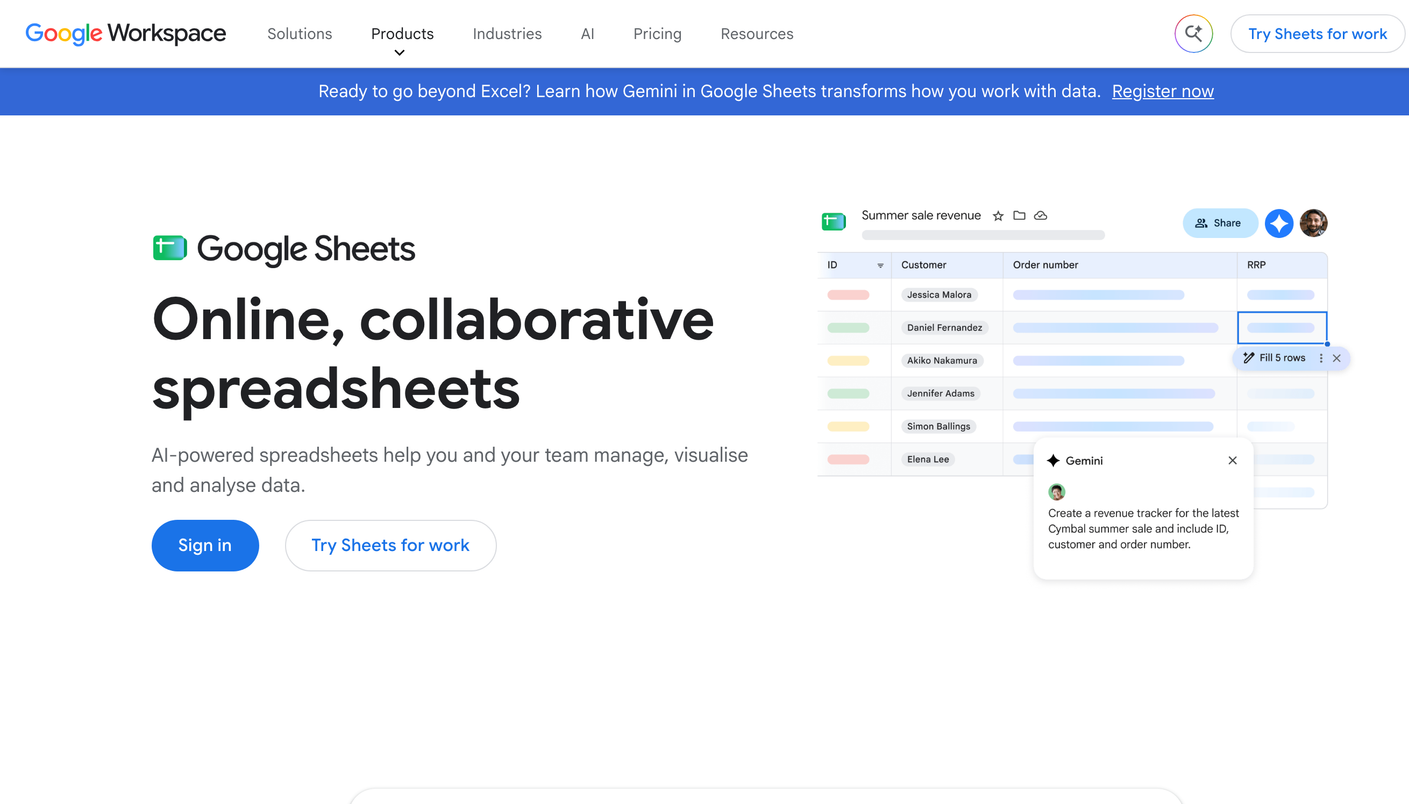
1. Google Sheets, 3/5 stars. The free first move. Run your alternatives and versus prompts by hand in each chatbot, log the answers in Google Sheets, and you know today where you stand. It tracks nothing automatically and recommends nothing, so you supply every hour.
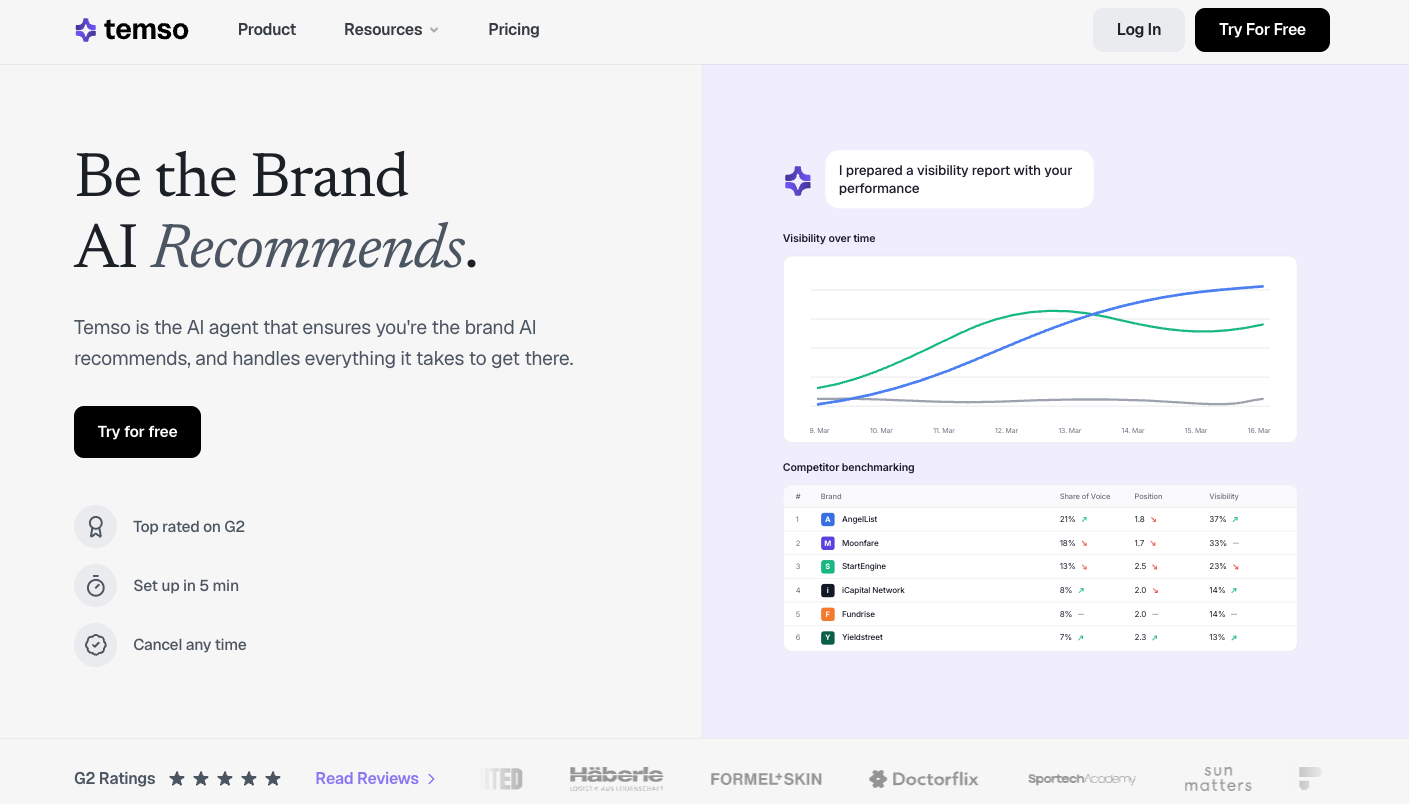
2. Temso AI, 4.5/5 stars. The highest score here and the all-in-one pick for agencies that serve SaaS clients. It tracks client brands across ChatGPT, Gemini, Copilot, and Google AI Overviews, with add-on engines on top, using data from real user interfaces rather than APIs, then closes the loop with site audits, bot traffic analytics, and citation work in the same product, plus content creation as an add-on. When your team is stretched, its agent will work through that action plan for you. Temso sells only to agencies, so a SaaS team gets it through an agency that runs Temso, or can run Peec AI alone. Honest knocks: the brand is younger than Semrush-era suites, and the integration catalog is smaller.
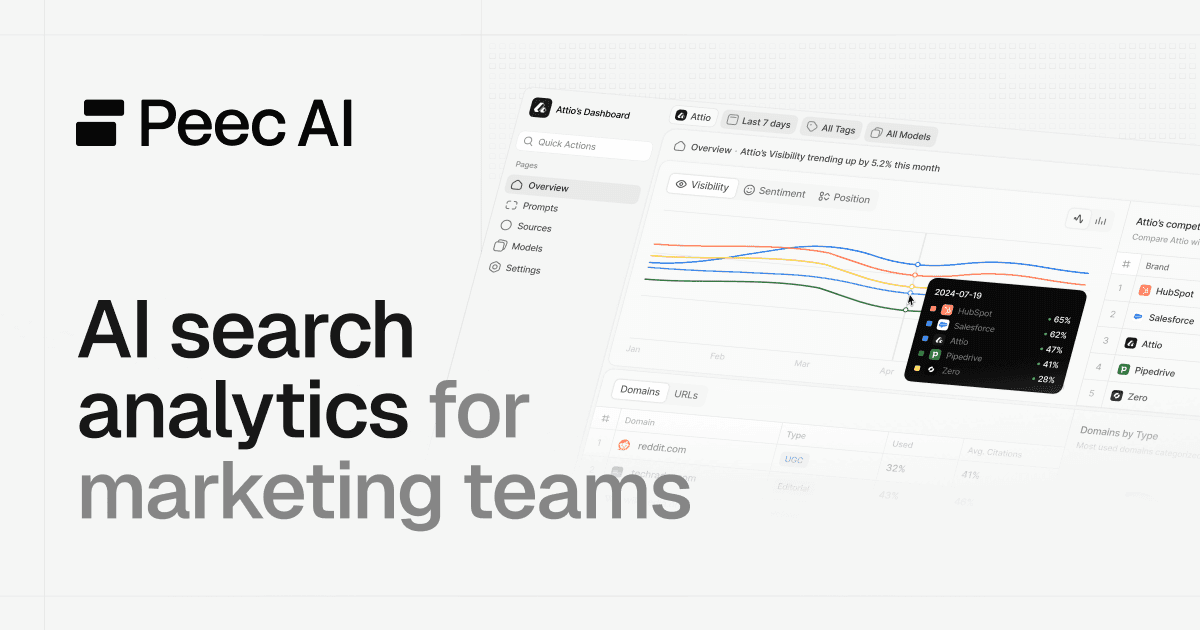
3. Peec AI, 4/5 stars. The prompt-data daily driver. Unlimited seats on every plan make it the easy pick when PMM, SEO, and founders all want eyes on the numbers. It tells you what to fix and stops there, so you supply the content muscle.
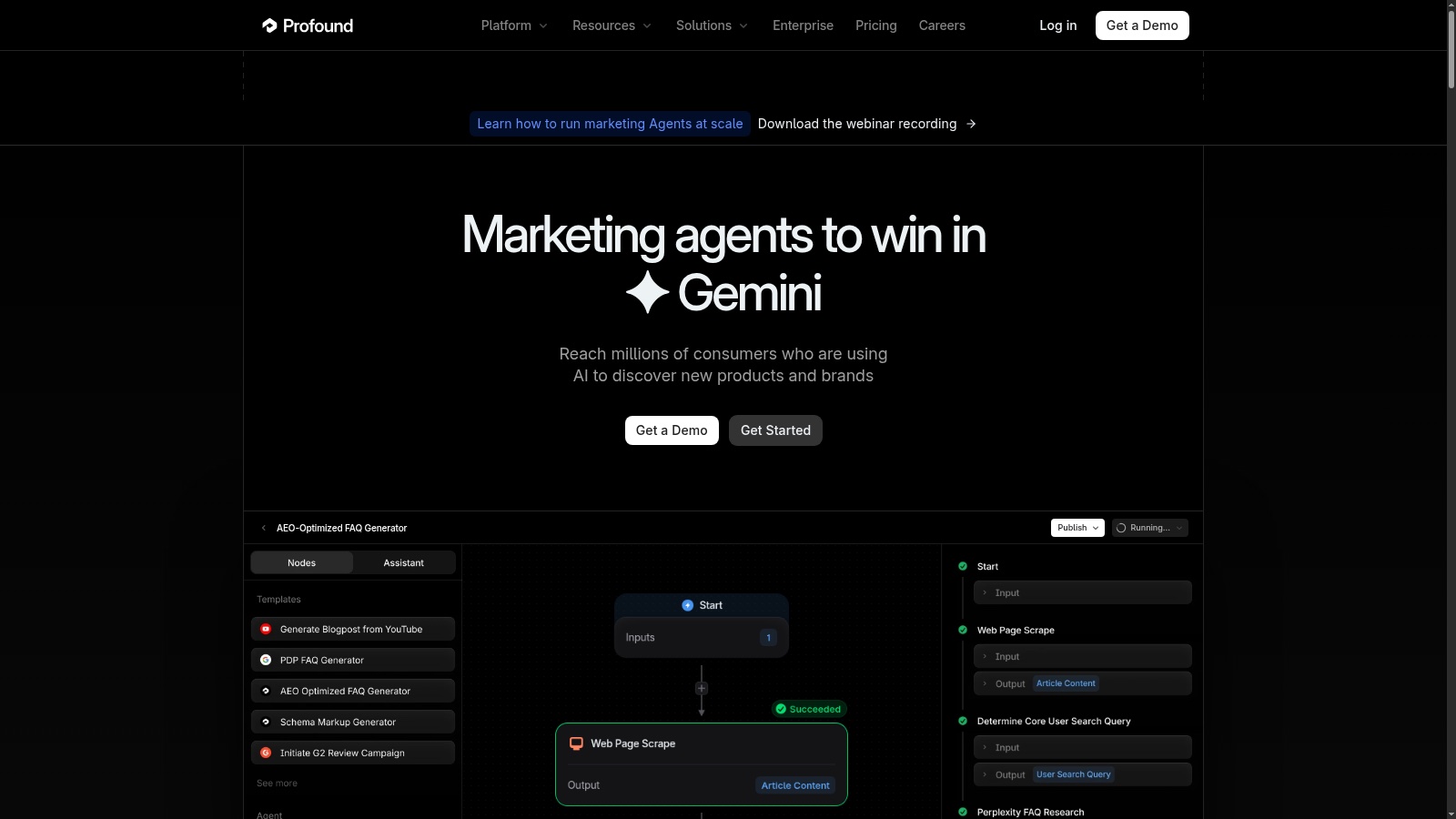
4. Profound, 4/5 stars. The analytics heavyweight. Citation maps and prompt volume data that survive a board meeting, priced for companies with dedicated AEO headcount. The $99 tier is a demo, not a plan; budget $399 per month.
Among paid tools, Otterly.AI wins our cheapest-entry-price criterion at 3.5 stars as the $29 experiment, and the rest of the field, Surfer for content-workflow value among them, sits on the full ranking.
Which Temso plan fits your agency
Temso sells one plan for daily tracking, Growth, with prompt tiers and no per-client or per-seat fees. No tier caps your client brands, your seats, or your recommendations, as of November 2026. Yearly billing takes 15% off.
- Launch, $10 per month. Unlimited pitch projects, with no daily client tracking. Right for an agency that pitches AI search work to SaaS prospects.
- Growth, from $199 per month. Four engines included, four as add-ons, 125 prompts, 1,000,000 audited pages a month. This is the fit for an agency with a handful of SaaS clients.
- Growth, $499 per month. The 350-prompt tier, with the same engines and audits. Built for agencies with multi-product SaaS clients. Content is a $149 per client brand/mo add-on on any tier.
Now the per-seat math, because this is where agency budgets die. Put six people on Temso Growth and each login costs about $33 per month. Grow to ten users and it drops under $20 a head, because the price never moves with seats. Compare that with Profound, where the workable plan starts at $399 for one property, or with tools that gate their action features behind enterprise tiers.
Bottom line: Growth at $199 covers the typical agency with SaaS clients; you only climb tiers for prompts, never for people or client brands.
The contract gotchas to check before you sign
- Entry tiers that cannot do the job. Profound’s $99 Starter watches one engine. Otterly’s $29 Lite caps at 15 prompts. Price the tier you will actually run.
- Add-on creep. Peec AI charges extra for specific models, so the invoice grows past the sticker. Ask for the all-in number for the engines you need.
- Property limits. Profound allows one property per account. If you run two products or a product plus a docs domain, confirm the setup before paying.
- Security paperwork. Neither Peec AI nor several smaller rivals hold SOC 2 Type II. If your buyer-side security review flows downstream to vendors, check this early.
Bottom line: Buyers are letting chatbots rewrite their shortlists, so start a free Google Sheets log of your top prompts today. When the sheet gets too big, 4.5-star Temso AI is the one tool here that both watches that happen and does something about it on a single bill with no per-client or per-seat fees. Temso sells only to agencies, so a SaaS team gets it through an agency that runs Temso.